Skip to content

Moulds, dies & production tooling

Moulds & tooling.Defined by your part.

BGS coordinates injection mould sourcing from India and supplies plastic injection tooling, dies and production tools through manufacturing partners.

Send your part drawing, material, volume and machine requirements. We coordinate quotations, trials and agreed ownership and handover terms.

Part definition · Machine interface · Trials · Handover

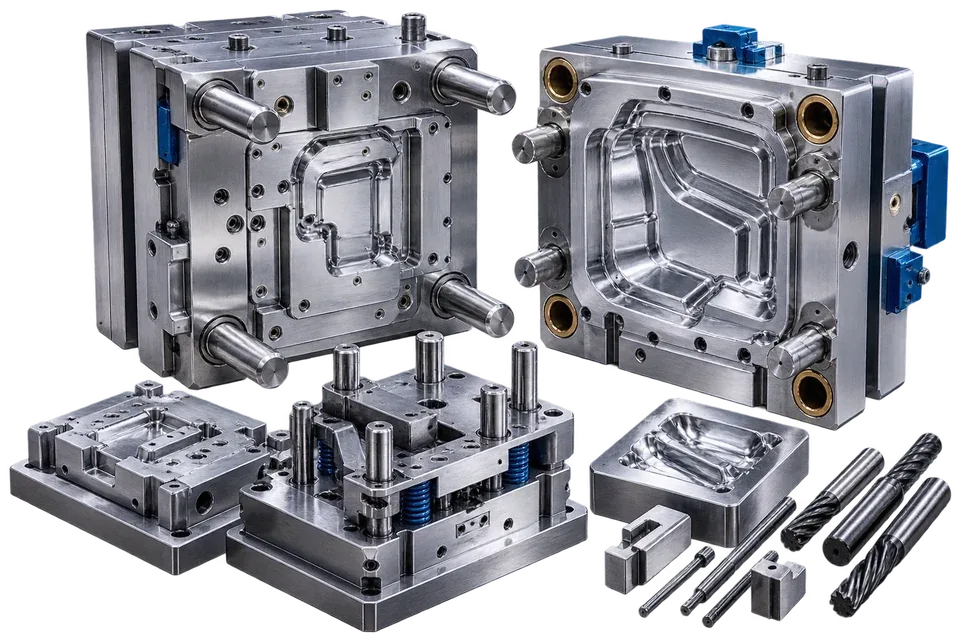
Illustrative mould assemblies tooling plates and precision inserts
Illustrative tooling families. The component and process define the brief.

Match the tool to the process

Injection moulds, dies
and production tooling.

Evaluate tooling against the part, material, machine and expected output. Include trials, corrections, documentation and production location in the source review.

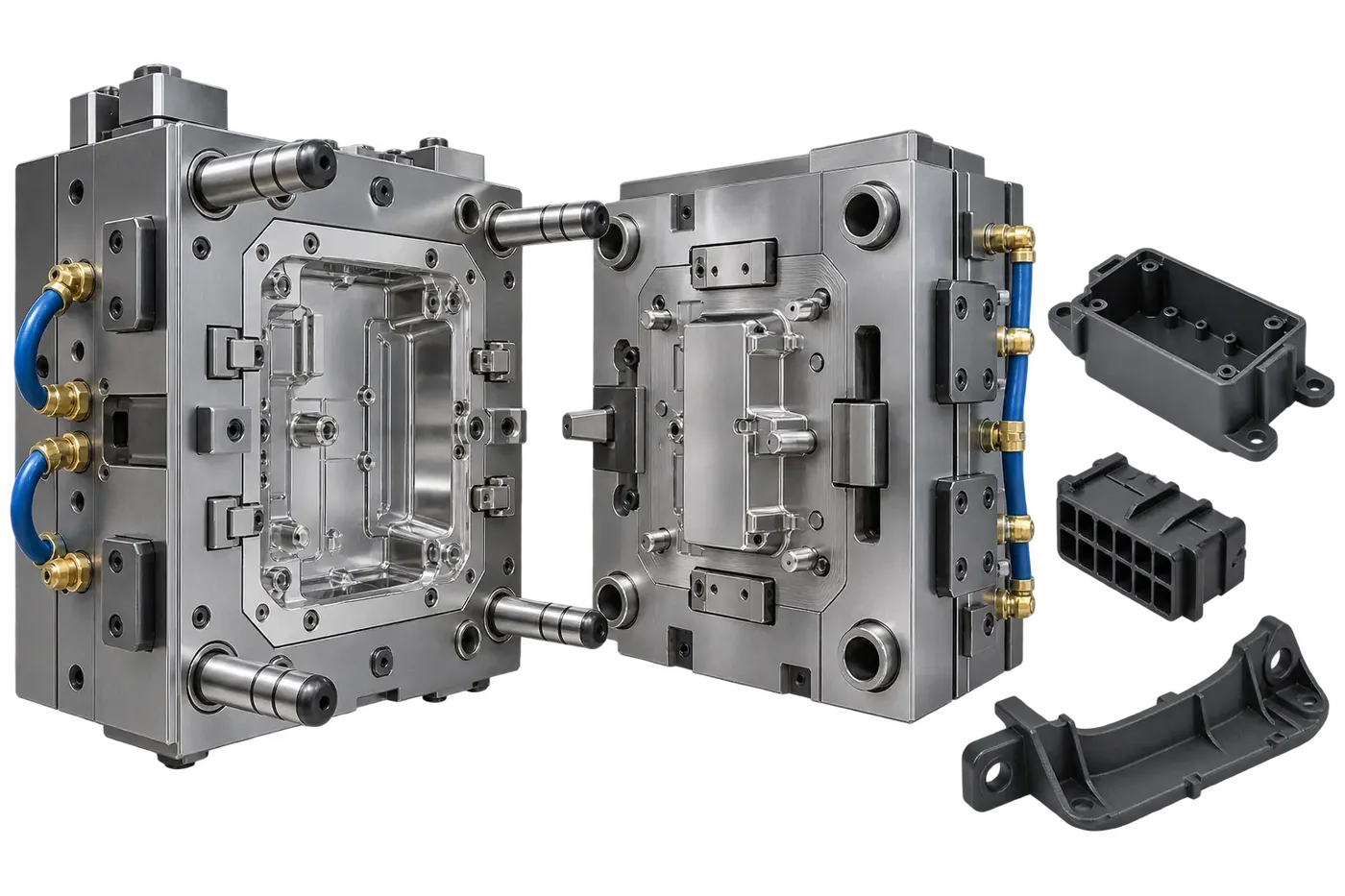
Illustrative plastic injection mould and moulded components

From part definition to mould concept

Plastic injection moulds

Single- or multi-cavity, insert and overmoulding requirements reviewed around the polymer, geometry, production machine and demand. Runner systems and cavity strategy are assessed for the project.

RFQ inputs for this option

Part CAD + resin grade + critical features + machine data.

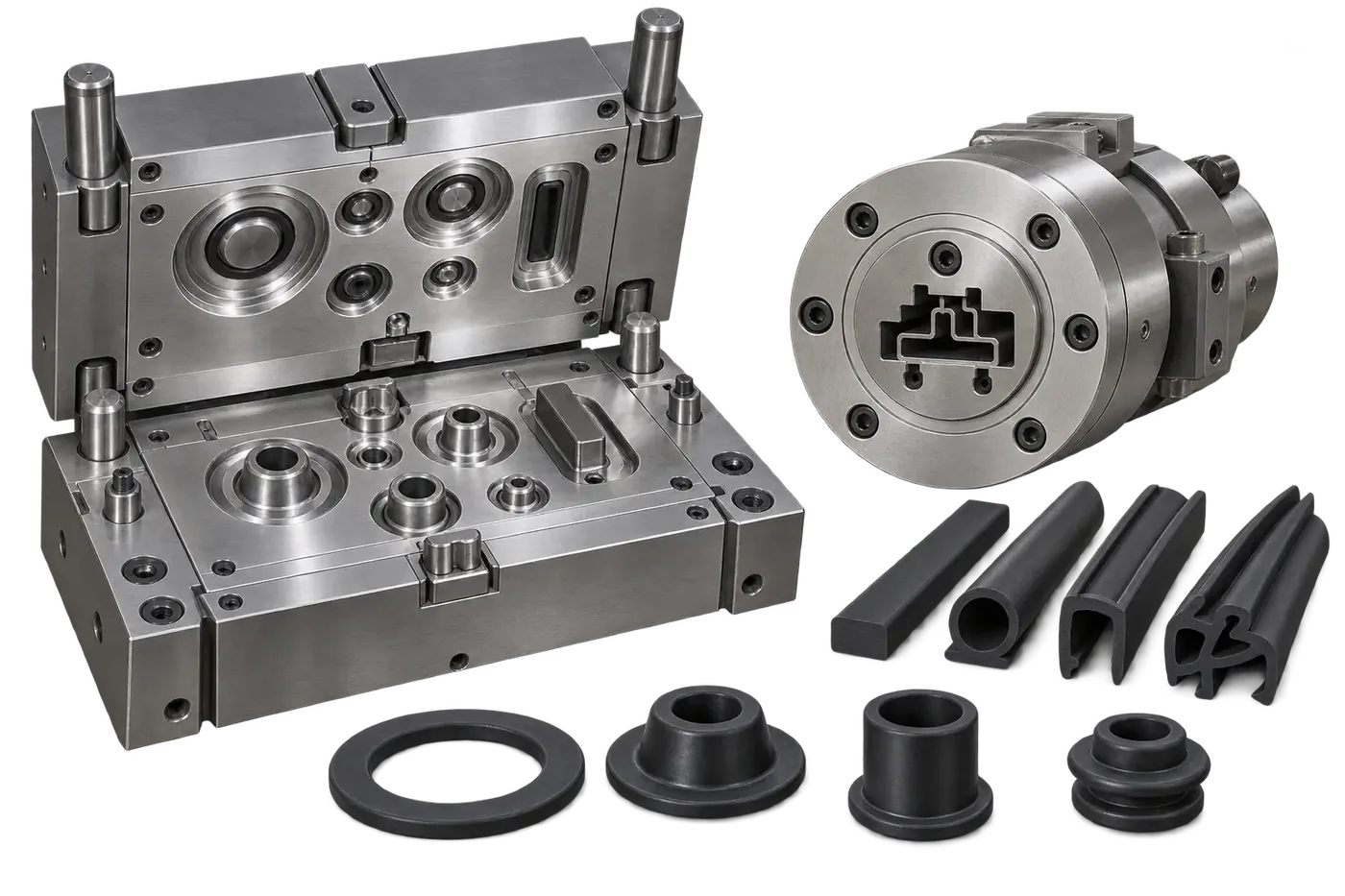
Illustrative rubber mould extrusion die and elastomer parts

Compound and process reviewed together

Rubber moulds & extrusion dies

Compression, transfer or rubber injection moulds, plus plastic or rubber profile dies, evaluated for the specified process, material and finished component.

RFQ inputs for this option

Compound or resin + profile/part drawing + trial criteria.

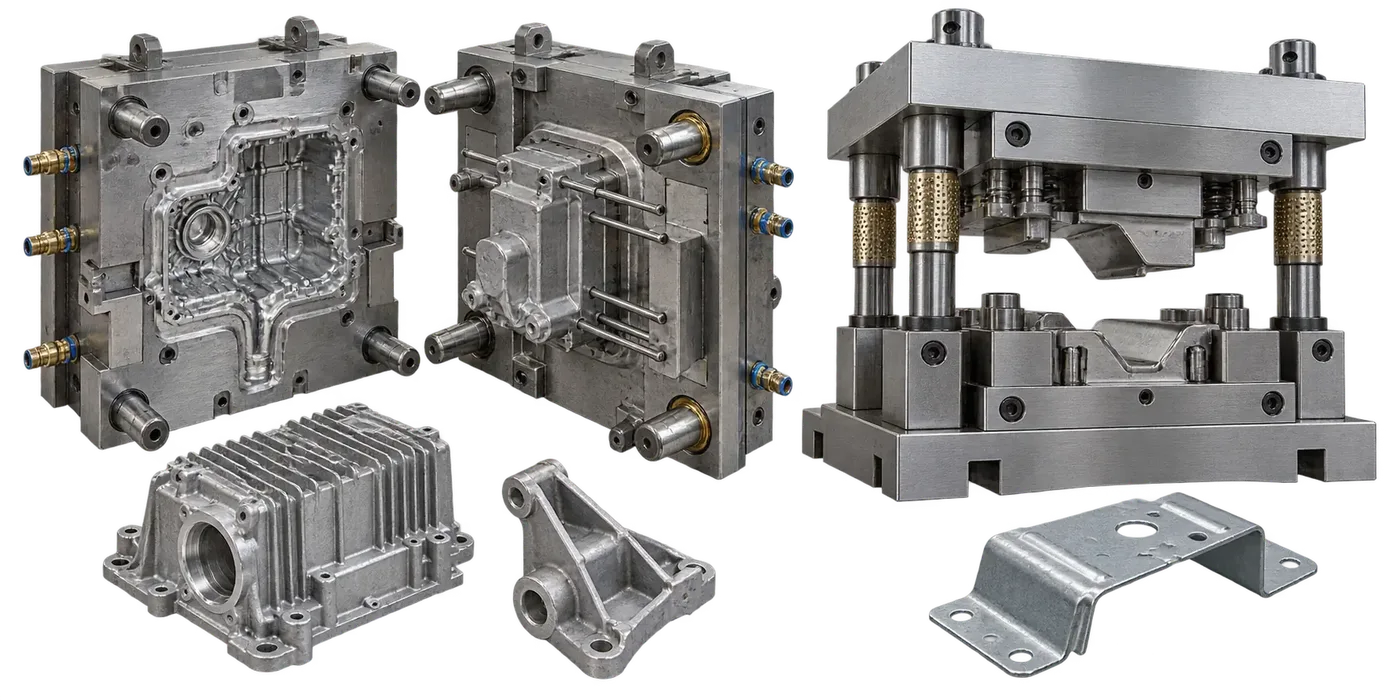
Illustrative die casting die and press tool with metal components

Define the forming or casting requirement

Die casting & press tooling

Die-casting dies and blanking, piercing, bending or forming tools reviewed around alloy or sheet grade, component geometry and intended production equipment.

RFQ inputs for this option

Material + part definition + process + equipment interface.

Compare tooling offers on one project basis

New tool

Provide part data, production process, machine interface and trial criteria.

Separate design, manufacture, trials and samples.

Existing tool

Share ownership, location, condition and available records.

Define the modification or transfer boundary.

Tool plus component supply

Agree tool ownership, sample release and repeat-part requirements.

Keep tooling and production quotations distinct.

Jigs, fixtures & dedicated production aids

Machining, assembly and inspection fixtures can be evaluated from the workpiece, locating scheme, operation, equipment and acceptance requirements. Include clamping, access and operator-interface needs.

Images illustrate tooling categories and are not evidence of completed BGS projects. Specific manufacturing and trial capabilities are confirmed with the selected partner.

Evidence for your source review

Certifications, Approvals
& Documentation

Match the evidence to the proposed manufacturer, product and market. Include your requirements in the RFQ so the relevant records can be requested and checked during source evaluation.

Manufacturer certifications

Identify the certificate holder and actual manufacturing facility. Review the standard, certified scope, issuing body and validity for the proposed source.

Applies to the named manufacturer or facility.

Product approvals

Where applicable, identify the covered product/model, configuration, market and approval or file reference. Confirm that the proposed item falls within the documented scope.

Applies to the identified product and approval scope.

Define the documentation you need.

Specify tool-material or treatment records, dimensional reports, trial evidence and acceptance documents. Tool qualification and product approval are separate.

Discuss Documentation

A quotation needs a production basis

Quote the tool.
Define the production basis.

Give each prospective source the same revision, material, output needs and acceptance scope. Identify fixed requirements and where alternatives may be proposed.

Download the Tooling RFQ Checklist

Tool delivery or production at source?

State where trials and series production will take place. A tool must be assessed for the intended equipment, utilities and operating conditions.

Component definition
2D drawing, CAD model, units, revision, material grade, critical features, surface and mating requirements.
Equipment & interface
Intended machine/process, mounting and envelope constraints, connections and available technical data.
Production requirement
Sample and batch quantities, expected annual demand, cavity needs and tool-life target with operating assumptions.
Trial & approval scope
Trial material and machine, sample quantities, inspection records, functional checks and buyer approval responsibility.
Resolve the tooling concept before manufacture

Tool architecture

Review cavities, inserts, parting and release concepts, runner or feed system and thermal control where applicable. Document proposed changes.

Tool material & maintenance

Specify material and treatment requirements, expected wear, spare inserts and maintenance assumptions for the intended duty.

Commercial boundaries

Separate design, manufacture, trials, corrections, samples, spare parts and delivery. Define how buyer design changes affect cost and timing.

Compare the whole offer

Compare deliverables as carefully as price.

Ask each source to state the same deliverables and exclusions so the quotation can be evaluated on a consistent basis.

Engineering
Design data, review and approval milestones.
Build & trials
Tool manufacture, trial material, machine time and sample quantities.
Corrections
Included trial corrections, buyer design changes and revalidation.
Handover
Inspection records, spare parts, packing, freight and support.

Tool completion is a milestone

Trial output defines
the approval discussion.

Agree what is checked, under which conditions and who releases the next stage. A finished tool and an approved production process are different milestones.

Design review

Confirm the controlled part definition, tooling concept and proposed departures before manufacture.

Tool trial

Run the agreed material and process on the agreed equipment. Record conditions, observations and sample identification.

Correction & recheck

Track trial findings, agree responsibility for changes and revalidate affected features. Keep drawing revisions controlled.

Approval & release

Review the agreed dimensional, appearance, fit and functional evidence before tool acceptance or production release.

What should be included in the approval package?

Tool identity

Tool number, approved design status, inserts, machine/interface information and included spare parts.

Trial evidence

Trial conditions, sample references, relevant material records, dimensional and agreed functional results.

Open actions

Corrections, concessions, remaining tests and clear responsibility and timing for closure.

Agree responsibilities before release

Ownership, maintenance
and handover stay explicit.

Clarify the intended use and location of the tool, together with the documentation and ongoing support included in the order.

Ownership & use

Agree ownership, permitted use, identification, storage and access or transfer arrangements.

Maintenance & spares

Define routine care, wear items, modification responsibility, maintenance records and replacement assumptions.

Delivery & transfer

Confirm preservation, packing, lifting or handling information, destination and commissioning or retrial needs.

Acceptance & records

Agree tool inspection, trial evidence, drawings and documentation required at the stated handover milestone.

Define tooling and component inspection separately.

Tool acceptance follows the agreed tool and trial criteria. For component orders placed on BGS, every unit is inspected against agreed criteria. For direct manufacturer orders, inspection and coordination services are agreed separately. This does not imply every tool characteristic or component feature is measured.

Your sourcing and coordination contact

One enquiry.
Clear project responsibilities.

Bhuvika Global Solutions, a trade name of S.B. Enterprises, keeps the sourcing, quotation and agreed development scope connected. Set the approval and purchasing responsibilities before work begins.

Three roles. An agreed scope.

BGS coordinates
Source review, clarification, quotations and the agreed trial and supply activities.
The toolmaker executes
Design and manufacture within the approved technical and commercial scope.
The buyer approves
Specification, proposed changes and the agreed acceptance and release milestones.

Evaluate relevant equipment, trial support and inspection resources. Verify any required certification for the actual facility and project.

Practical buyer questions

Before you commission
the next tool.

Is BGS a toolmaker?

Bhuvika Global Solutions (BGS), a trade name of S.B. Enterprises, coordinates tooling sourcing through suitable Indian manufacturing partners. The selected toolmaker designs and manufactures within the agreed scope. Engineering resources, equipment, trial capability and quality-system requirements are checked for the individual source and project.

What should I send for a tooling quotation?

Share the current part drawing and CAD model, component material, critical dimensions, appearance requirements, intended process and production demand. Include machine/interface data, cavity needs where fixed, tool-life target and trial acceptance criteria. State what remains open for manufacturer review.

Can BGS coordinate a new tool and subsequent component supply?

Yes, the tooling and component-supply requirements can be reviewed together. Confirm whether the tool stays with the manufacturer or is delivered to your production location. Tooling approval, component approval and recurring production supply are separate agreed milestones.

Can an existing tool be modified or transferred?

Share tool drawings, condition, production history, ownership and location, sample issues and intended machine data. The proposed source must review compatibility, refurbishment, transfer logistics and revalidation before committing to the work.

Who owns the tool, and what is included at handover?

Ownership, usage rights, storage, maintenance, access to design data, spare parts and any transfer or delivery arrangements must be agreed for the project. The quotation and order should identify the included deliverables and responsibilities; payment for tooling alone should not be treated as a complete handover specification.

How are lead time, tool life and trial corrections agreed?

Timing depends on design maturity, material, complexity, capacity, trial equipment and correction cycles. Define the target life and its operating assumptions, planned trials, included corrections and how later design changes are quoted. No universal lead time or tool-life guarantee applies to every project.

Can I require inspection reports, trials or specific quality systems?

Yes. Name the required records, measurement methods, material or heat-treatment records, trial conditions and approval criteria. Verify any certification against the actual manufacturer and facility. Availability, scope, cost and buyer approval responsibilities are agreed before release.

Choose your starting point

Start with the information
you have today.

Send what you have and identify open inputs. We’ll review the requirement and clarify the next step for toolmaker evaluation.

New mould, die or fixture

Share the part model and drawing, material, process, production demand and intended machine data. Flag requirements that need review.

Review Your New Tooling Brief

Existing tool or modification

Share available tool records, ownership, condition, sample findings, proposed changes and the intended production location.

Discuss Your Existing Tool

Tooling with component supply

Include tooling needs and recurring part demand. Define where production will run and separate tooling approval from part acceptance.

Review Tooling & Part Supply

Start with the part and production plan

A defined tool.
A clearer production plan.

Share the available engineering files, production context and acceptance requirements. We’ll review the inputs and clarify what is needed for manufacturer evaluation.

Confidential engineering information can be discussed under an agreed NDA where required.

Scroll to Top

Your analytics choice

With your permission, BGS uses Google Analytics to understand page visits, email clicks and successful RFQ submissions. Your enquiry text and documents are not sent to analytics. You can use the website without optional analytics.

Privacy Policy