
How to Build a B2B Lead Pipeline from Scratch
Learn how to build a B2B lead pipeline from scratch using structured targeting, outreach, and follow-up to generate consistent business opportunities.
BUSINESS DEVELOPMENT
Bhuvika Global Solutions
5/2/20264 min read
For most B2B businesses, especially in manufacturing and industrial sectors, growth depends on a steady flow of qualified opportunities. However, many companies operate without a structured lead pipeline and rely on references or occasional inquiries. While this may work in the short term, it limits scalability and creates inconsistency in business development.
Building a B2B lead pipeline from scratch is not about generating random leads. It is about creating a repeatable system that continuously identifies, engages, and converts potential customers into business opportunities.
What a B2B Lead Pipeline Actually Means
A B2B lead pipeline is a structured flow of potential customers moving through defined stages — from initial identification to final conversion. It ensures that each opportunity is tracked and nurtured properly rather than being lost due to lack of follow-up or organization.
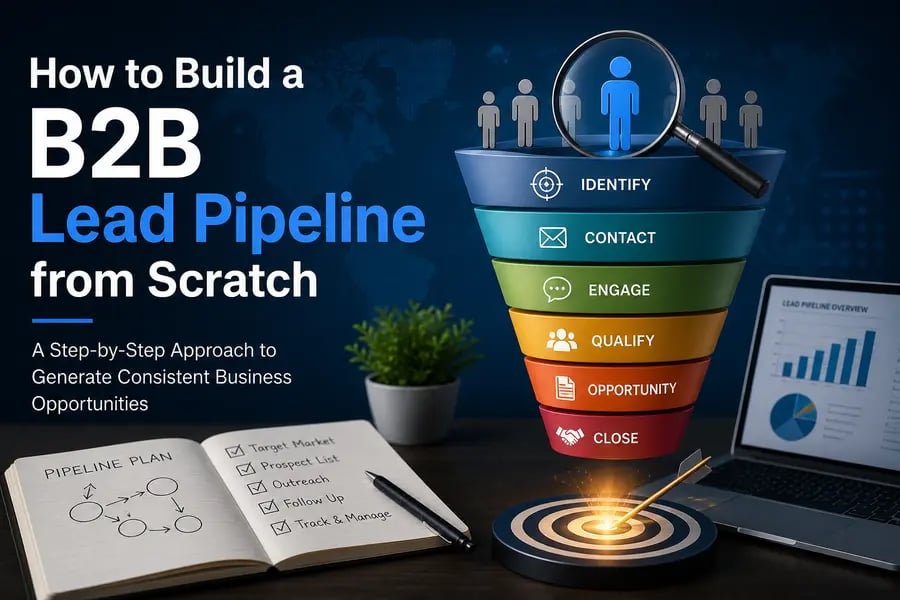
In simple terms, a pipeline typically moves through stages such as:
identifying relevant companies,
establishing initial contact,
following up and building communication,
converting interest into RFQs or inquiries,
and finally closing the opportunity.
The objective is not just to generate leads, but to manage them effectively until they become business.
Why Most Companies Struggle to Build a Pipeline
Many businesses attempt lead generation but fail to convert it into a pipeline. The issue is rarely the lack of effort — it is the lack of structure.
Common gaps include unclear targeting, inconsistent outreach, and no system to track progress. In many cases, companies depend heavily on a few existing clients, which increases risk and limits growth potential.
Without a defined process, even good leads fail to convert into opportunities.
A Practical Approach to Building a Pipeline
Building a pipeline requires a disciplined approach. It is not a one-time activity but a continuous process that improves over time. The focus should be on relevance, consistency, and tracking.
Step 1: Define Your Target Market Clearly
Everything starts with clarity. Instead of targeting a broad market, it is important to define exactly where your product or service fits.
This includes identifying:
the right industries,
the geography you want to target,
and the type of companies most likely to require your offering.
For example, a manufacturer of plastic components may focus specifically on automotive OEMs, packaging companies, or consumer product manufacturers.
A clearly defined target significantly improves response quality and reduces wasted effort.
How to Build a B2B Lead Pipeline from Scratch
Step 2: Build a Relevant Company Database
Once the target is defined, the next step is to identify companies that fit your criteria. This should be done using reliable and publicly available sources such as search engines, industry directories, trade platforms, and company websites.
Instead of focusing on quantity, the goal should be to build a relevant and focused list. Even a smaller, well-researched database can generate better results than a large, generic one.
Step 3: Identify the Right Decision Makers
In B2B, reaching the right person is often more important than reaching many people. Contacting general email IDs rarely leads to meaningful conversations.
The focus should be on roles such as:
procurement or purchase heads,
sourcing managers,
or technical decision-makers depending on the product.
Direct access to the right person significantly increases the chances of engagement.
Step 4: Initiate Structured Outreach
Outreach should be simple, professional, and relevant. The objective is not to sell immediately but to initiate a conversation.
A good outreach message typically includes:
a brief introduction,
a clear statement of what you offer,
and a simple indication of how you can support their requirements.
Avoid long, generic emails. Clarity and relevance are far more effective.


Step 5: Follow Up with Consistency
One of the most common reasons for failure in lead generation is lack of follow-up. Many opportunities are lost simply because there was no second or third interaction.
A structured follow-up approach helps maintain visibility and reinforces intent. In most cases, responses come after multiple touchpoints rather than the first message.
Step 6: Track and Manage Your Pipeline
A pipeline is only effective if it is tracked properly. Without tracking, leads get lost, follow-ups are missed, and opportunities are forgotten.
Even a simple system can work effectively. Track:
who has been contacted,
who has responded,
which stage the lead is in,
and what the next action should be.
Over time, this creates a clear picture of your business development performance.
How a Simple Pipeline Structure Looks
A practical pipeline does not need to be complex. It can be structured in a few clear stages:
Identified companies
Contact initiated
Follow-up stage
Active discussion
RFQ or opportunity
Conversion
This structure helps maintain clarity and improves decision-making.
Real-World Insight
Businesses that implement even a basic pipeline system often experience a noticeable improvement in results. Instead of relying on random inquiries, they build a predictable flow of opportunities.
In many cases, a well-managed pipeline with 50–100 targeted companies performs better than unstructured outreach to hundreds of contacts.
Common Mistakes to Avoid
While building a pipeline, companies should avoid:
targeting too many industries at once,
sending generic outreach messages,
failing to track progress,
and expecting immediate results.
Consistency over time is far more important than short-term activity.
Conclusion
Building a B2B lead pipeline from scratch is a strategic process that requires clarity, discipline, and consistency.
It is not dependent on tools alone, but on how effectively the process is designed and executed. Companies that focus on structured targeting, meaningful outreach, and proper follow-up are able to generate a steady flow of business opportunities.
A strong pipeline is not just a sales tool — it is the foundation of long-term growth.
About Bhuvika Global Solutions
Bhuvika Global Solutions supports businesses in building structured lead generation systems by creating organized pipelines, identifying target markets, and enabling consistent outreach strategies that lead to real business opportunities.


+91 87008 39413
info@bhuvikaglobalsolutions.com
Contact
Sector 21, Rohini, New Delhi - 110086, India
Address


Bhuvika Global Solutions is a business development and market entry partner helping companies build and grow in India and global markets through strategy, on-ground execution, and customer-focused solutions.
Copyright © 2026 Bhuvika Global Solutions — Build. Connect. Grow.
Quick Links
Insights